Noun gender in Spanish
We know that most of the time, if a words ends in an "o" it's going to be a masculine word, and if it ends in an "a", a feminine word. If a word has both endings to »
We know that most of the time, if a words ends in an "o" it's going to be a masculine word, and if it ends in an "a", a feminine word. If a word has both endings to »
Hello! We all want to sound authentic when talking in a different language, and use the informal expressions like natives do. Obviously, there's loads of them! So probably there'll be more posts about it. But for now, these »
Is it "quedar"?, is it "quedarse"? How do I use each? What do they mean? This is one of those pair of siblings that confuse people. I think this very short video will make a better job than »
This is a frequent question, specially for beginners. Why do both mean "to have" but are used so differently? Well, in this video I explain the similarities and differences between these two. If you're up to the challenge, »
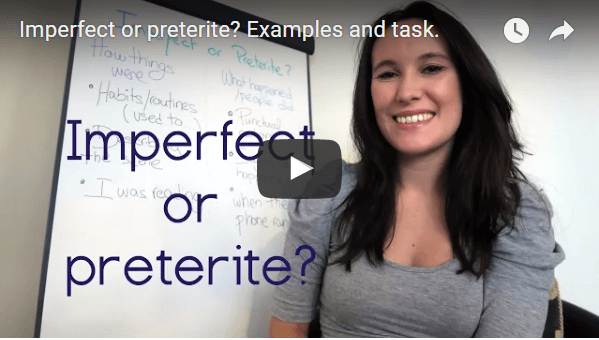
In this video I'll teach you how to know to use imperfect or preterite tense. You also have plenty of examples, which is essential to understand this type of thing! Finally, a little task for you to do, »
The expression "hay que..." is very common and it's used to express that somebody needs to do something. It's an impersonal phrase (not addressed to anybody in particular), actually it can be considered the impersonal version of "tener »
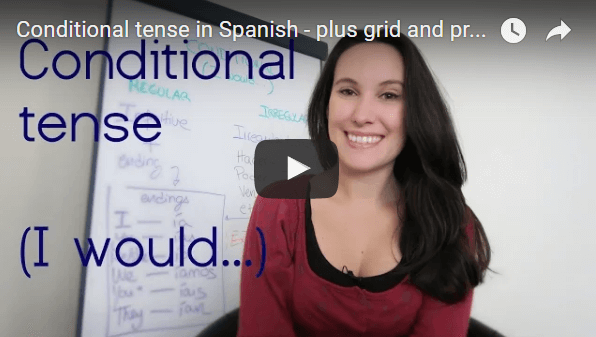
In today's video you'll learn: - How to create the conditional tense with both regular and irregular verbs. You'll have access to a grid to use in your practice and the option to do some translations which I'll »
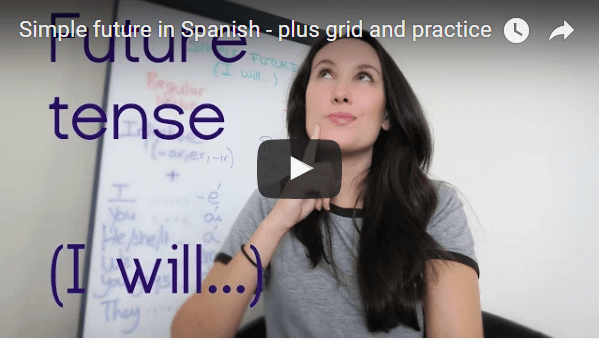
In today's video I'll explain how to create the simple future with regular verbs and irregular verbs (only 12, we're lucky!). Also, I'll give some examples and suggest some practice. Finally, here you can download a cheat sheet »
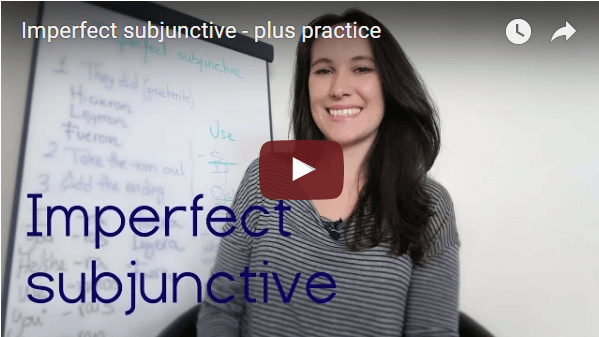
As I said in the post on present subjunctive, the subjunctive mood is like another reality, where we talk about the hypothetical things. In this case we'll talk about expressing the things we wished were different and we'll »
As you know, in Spanish we use both "v" and "b" although the two sound the same way, like a "b" (as in "bee"). That makes it more difficult to know when a word is spelled with a »